

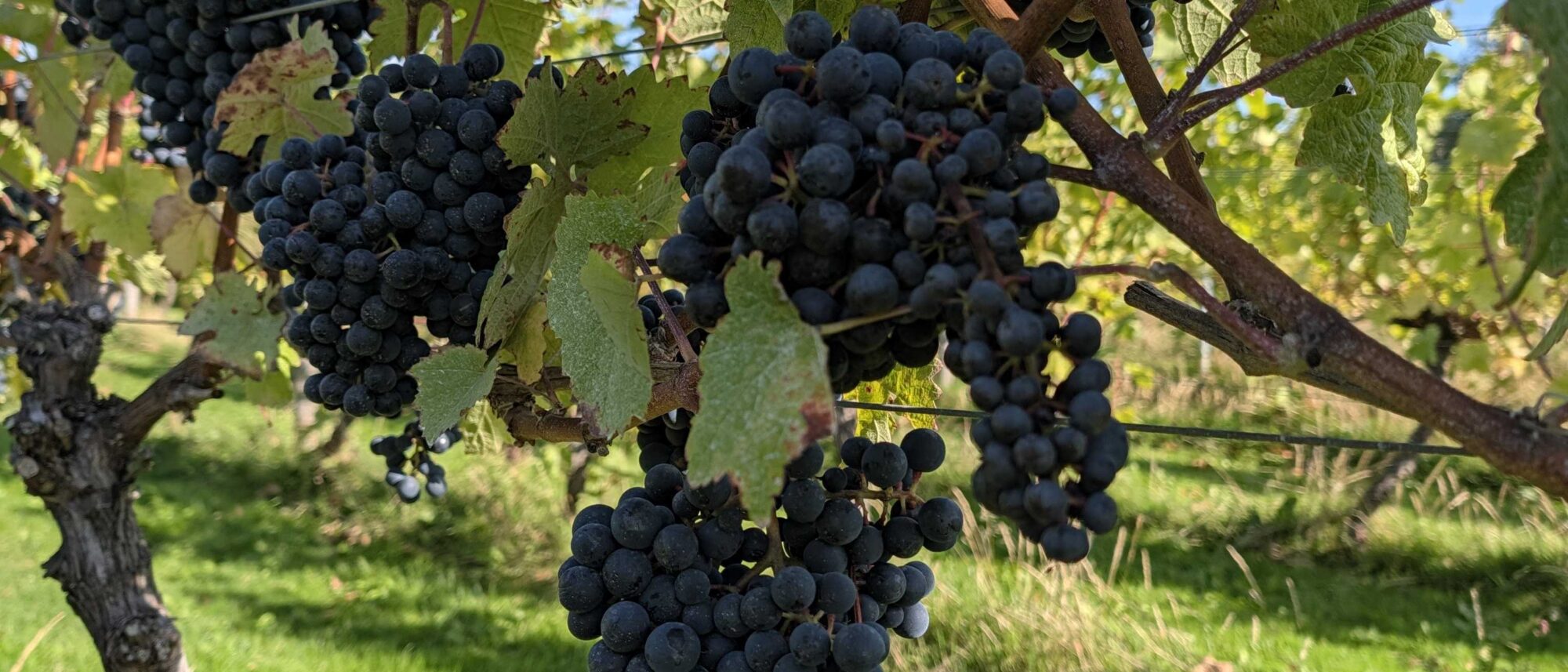
It’s just after seven in the morning at Nun Monkton and the rows are cold enough to make your fingers ache. Secateurs click, crates fill slowly, and the air smells of wet leaves and something very close to strawberry jam. This is Pinot Noir harvest, and this is our guide to what Pinot Noir actually is, written from inside a vineyard that grows it.
It’s a fair thing to ask us about, too. Pinot Noir is the grape winemakers love to moan about. It’s thin-skinned, fussy and quick to sulk, and the received wisdom says it needs somewhere like Burgundy to do its best work. England was meant to be a stretch. Yorkshire was meant to be out of the question.
We grow it anyway. Here’s what it is, why it’s the hardest grape on our patch, and what ends up in the glass when it all comes good.
What is Pinot Noir?
Pinot Noir is a thin-skinned black grape that makes light-bodied, silky red wine, and is also pressed to make white and sparkling wine. It’s one of the oldest cultivated grape varieties in the world, the red grape of Burgundy and one of the core grapes of Champagne.
The name tells you what it looks like. “Pinot” comes from the French word for pine, because the tight little bunches are shaped like pine cones. “Noir” simply means black, after the colour of the skins.
Is Pinot Noir red or white?
Pinot Noir is red. It’s a black grape that makes a light red wine, but because its juice is clear, it can also be pressed gently and quickly to make white and sparkling wine without picking up colour from the skins. If you want the full story on how skins decide the colour, we’ve covered the differences between red and white wine separately.
It’s the same grape wherever it’s grown, but it’s unusually good at showing where it comes from. Pinot Noir from a warm Californian valley and Pinot Noir from a cool Yorkshire slope can taste like two different wines. That’s a big part of why people get so attached to it, and why we wanted to grow it here.
Why Pinot Noir is the hardest grape we grow
We’ll be honest: of everything we farm, Pinot Noir is the one most likely to give us a bad year.
Those thin skins are what give the wine its delicacy, but they also make the fruit fragile. The bunches grow tightly packed, which traps moisture between the berries, and in a damp English autumn that’s an open invitation to rot. Pinot Noir also buds early in spring, so a late frost can take out a chunk of the crop before the season has properly started.
Then there’s the picking window. Leave the fruit too long and you risk the weather turning and the skins splitting. Pick too early and you get sharp, green flavours that no amount of care in the winery will fix. Some years that window is a couple of weeks. Some years it’s a matter of days.
Yields are low even in a good season, and every bunch has to be handled with kid gloves to protect those delicate skins. As Tim puts it, “Pinot Noir is a labour of love.”
That’s the trade-off. A grape this fussy asks a lot of us, but when it works, it gives back something no easier variety can: a red wine with real finesse, grown a few miles from York.
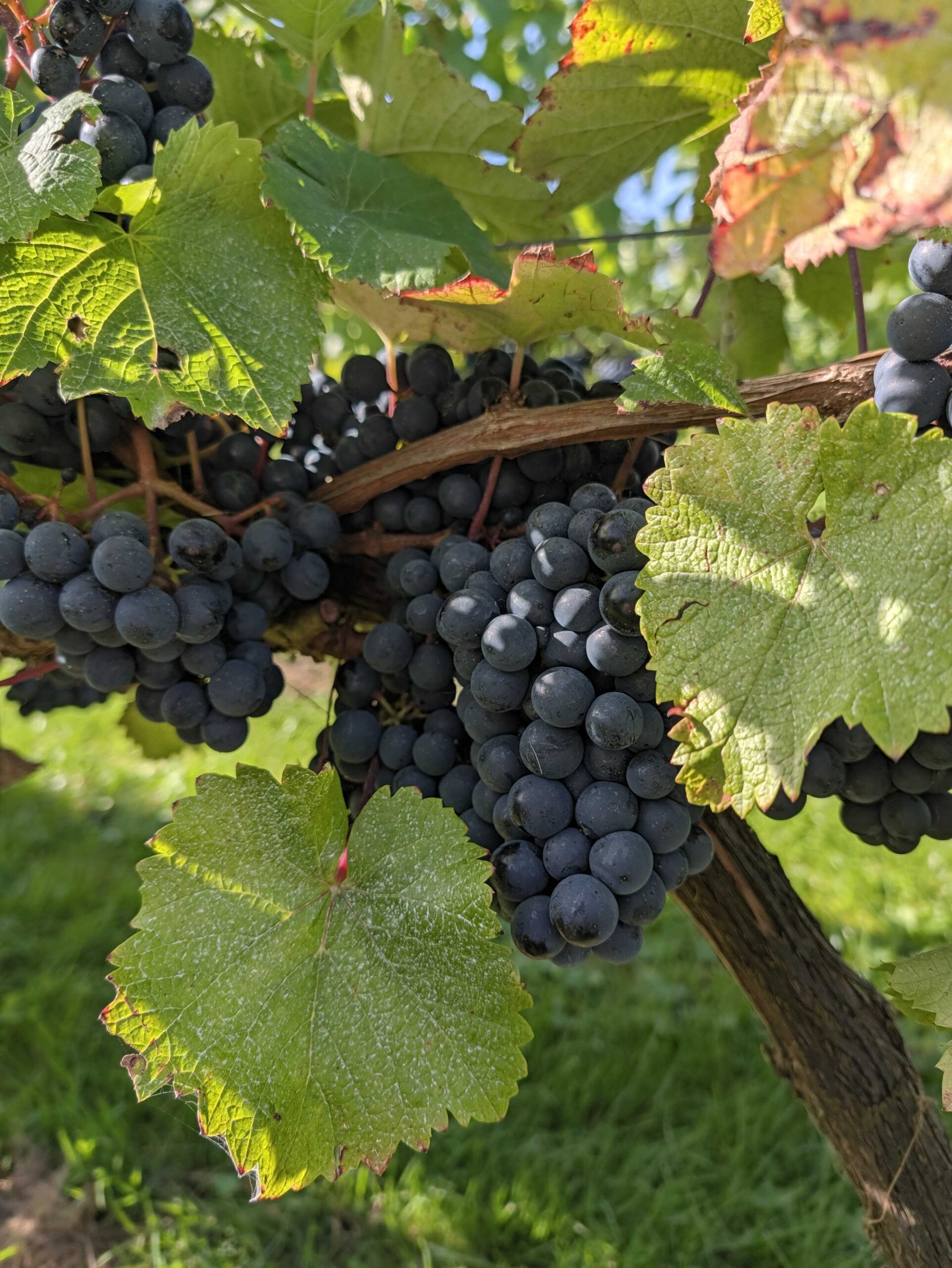
Harvest day at Nun Monkton
Harvest doesn’t start with the secateurs. It starts weeks earlier, at veraison, when the green berries soften and turn from hard and sour to deep purple-black. From then on, we’re in the rows most days.
Making the call on when to pick is part science, part instinct. We take regular sugar and acid readings to see how ripe the fruit is getting, but we also just walk the rows and taste the berries. You’re looking for ripe, red-fruited flavour, soft skins and seeds that have turned from green to brown. And all the while, someone is refreshing the weather forecast. In Yorkshire, the forecast often has the final say.
When the day comes, everything is picked by hand. Machines would be quicker, but they’d also bruise and split fruit that we’ve spent all year protecting. The bunches go into small crates, never piled too deep, so the weight of the fruit on top doesn’t crush the fruit underneath. Anything that isn’t up to scratch is sorted out in the rows or on arrival, and the grapes go straight to the winery the same day, while they’re still cool and fresh.
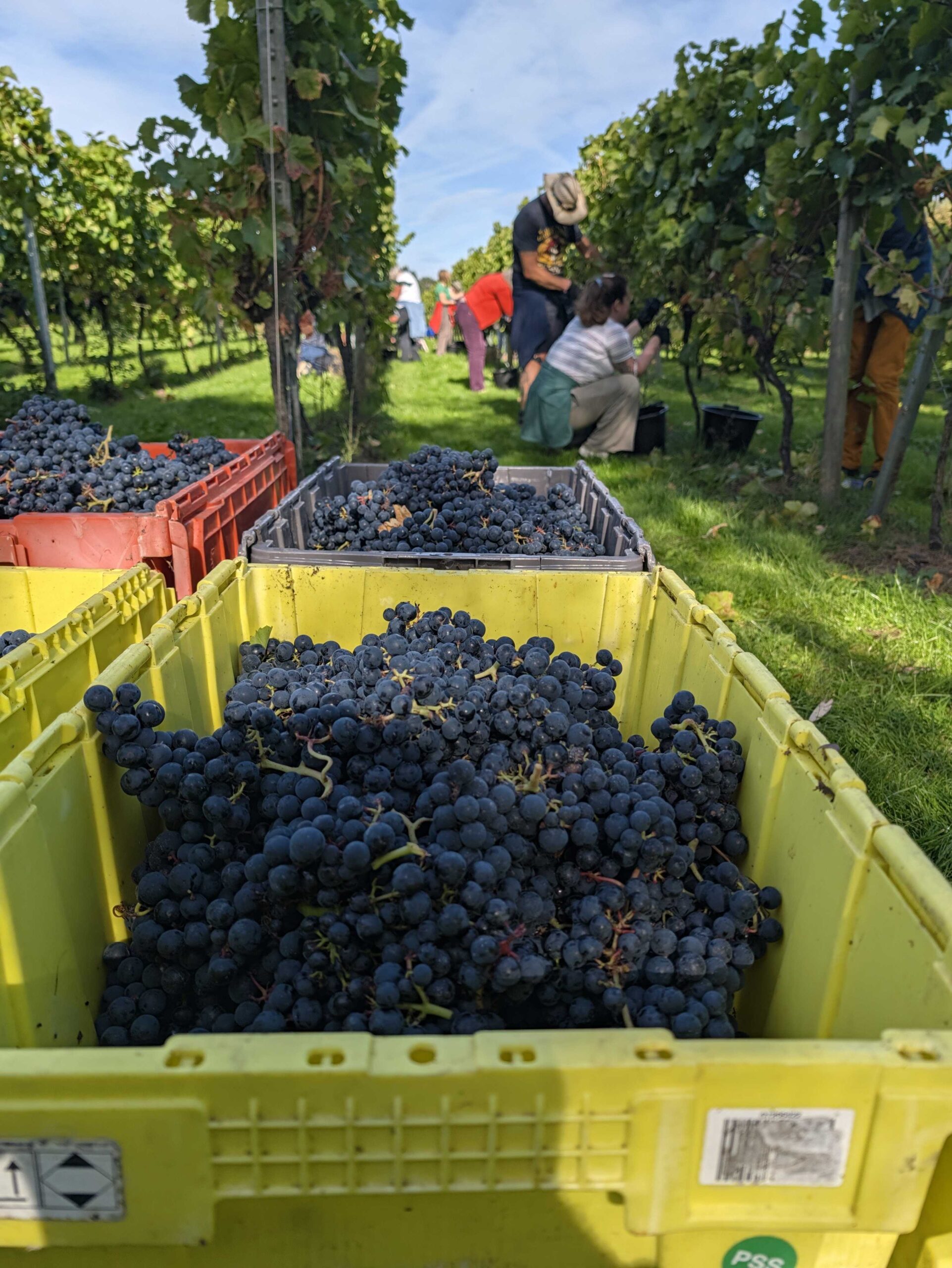
When are grapes harvested in the UK?
In England, the grape harvest usually runs from late September through October, depending on how warm and dry the season has been. This year, we picked our Pinot Noir on September 23rd as we had a particularly mild start to Autumn. From the winery door, the fruit starts a whole new journey. If you’re curious about what happens next, we’ve walked through it step by step in from vine to wine.
Why cool climate changes the wine
Growing Pinot Noir in Yorkshire isn’t just harder than growing it somewhere warm. It makes a different wine.
In a cool climate, grapes ripen slowly. That long, gentle season lets the flavours build while the fruit holds on to its natural acidity, which is what gives a wine its freshness. Less intense sun also means less sugar in the grapes, and less sugar means lower alcohol. Our Pinot Noir sits at 11.0% ABV, noticeably lighter than a lot of New World Pinot Noir, which often comes in at 13.5% or more.
What you get is a red that’s fresher, more delicate and more aromatic, with bright red fruit rather than anything heavy or jammy. That’s exactly why so much of the interest in English red wine centres on Pinot Noir. It’s the grape best suited to what our climate does naturally, and it makes the kind of light red wine that’s easy to love.
It’s tempting to compare English Pinot Noir with Burgundy, and there are similarities: both are cool-climate, both prize elegance over power. But we’d rather not overclaim. A Yorkshire Pinot Noir isn’t trying to be a Burgundy, and it isn’t better or worse. It’s a different expression of the same grape, grown in a different place. We’ve written more about this in our honest take on English wine vs French wine.
What does English Pinot Noir taste like?
Pour a glass of our Pinot Noir and the first thing you’ll notice is the colour: a translucent ruby, light enough to see through. On the nose there’s raspberry, cherry and a hint of spice. In the mouth, it’s light, silky and bursting with wild strawberry, with soft tannins and a refreshing finish.
Tim deliberately keeps oak in the background, so the fruit does the talking. It’s a red wine for people who “don’t usually drink red”, and one that still gives wine lovers plenty to think about.
We’re not the only ones who think so. When Oz Clarke and Tom Surgey tasted it on camera in our vineyard for Oz & Tom’s English Wine Heroes 2026.

Oz didn't hold back
"Wines of this quality coming out of Yorkshire tells you everything you need to know about how fast English wine is moving."
Oz Clarke
And, with a grin: “I think it’s so Yorkshire, isn’t it?”
The judge's note puts it just as clearly
"A bright coloured, lively red with cranberry, redcurrant jelly and rosehip tension… Brilliant that Yorkshire is already making tasty red, of this quality today. Bravo!"
Oz Clarke
We’re chuffed, and that’s before you count the Bronze it picked up at the WineGB Midlands & North Awards. The Wine Heroes 2026 book lands in October, so keep an eye out for it.
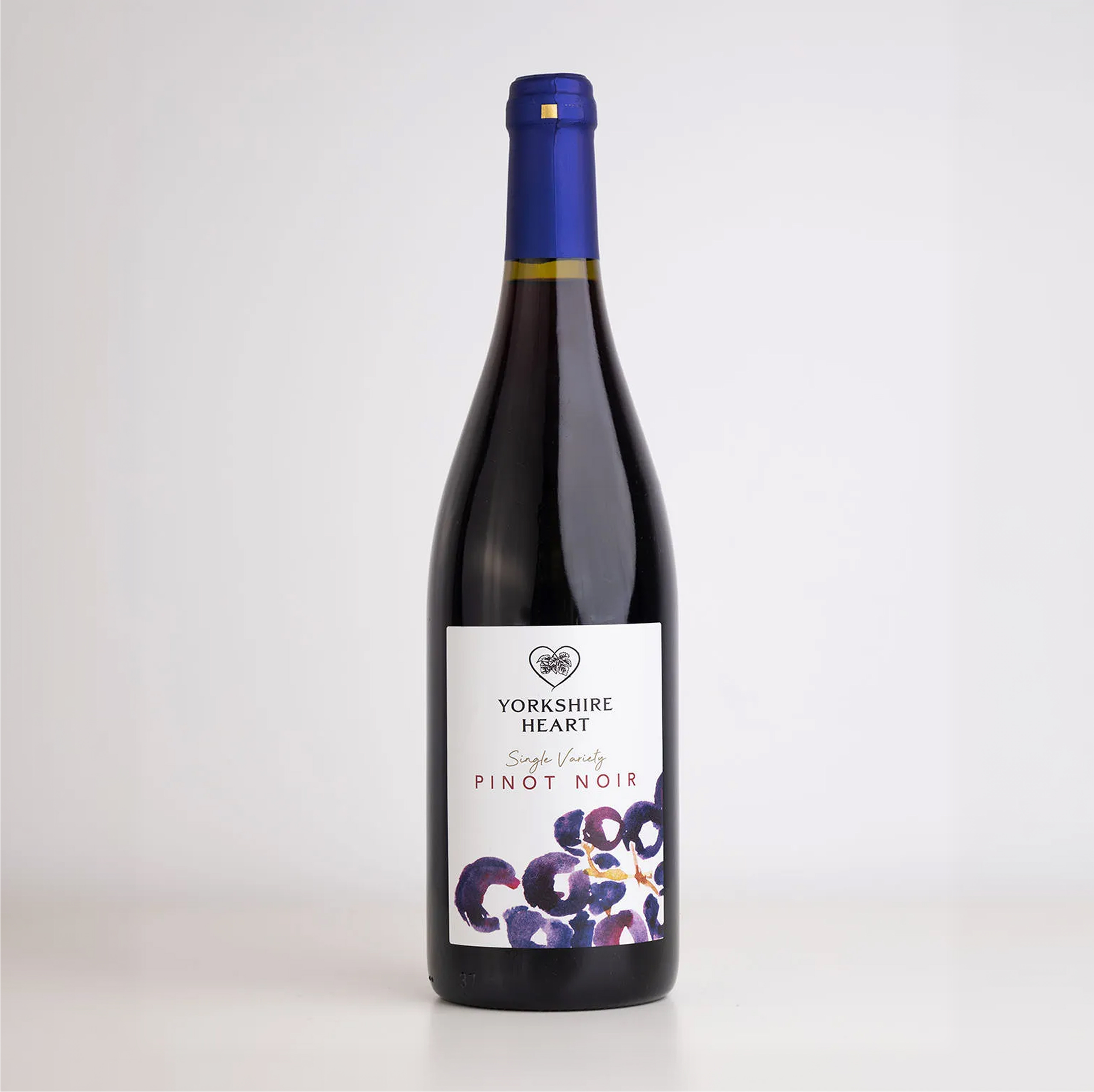
Pinot Noir
A light bodied, smooth acidity wine with delicious flavours of red cherry and raspberry producing a long lasting fruit finish
How to serve and pair Pinot Noir
Should Pinot Noir be chilled?
Yes, lightly. Pinot Noir is at its best slightly cool, at around 14 to 16°C. That’s cooler than most rooms, so 20 to 30 minutes in the fridge before you open it is about right. A light chill lifts the red fruit and keeps the wine tasting fresh, while serving it too warm can make it feel flat.
What to eat with Pinot Noir
Because it’s light, with soft tannins and good acidity, Pinot Noir is one of the most food-friendly reds going. It works with dishes that would be overpowered by a big, heavy red.
- Roast duck. The classic match. The wine’s acidity cuts through the richness and the red fruit loves the meat.
- Mushroom dishes. Mushroom risotto, a wild mushroom pie or mushrooms on toast all bring out the wine’s earthier side.
- A charcuterie board. Cured meats, pâté and a bit of cheese are an easy, no-fuss pairing.
- A Yorkshire Sunday roast. Roast chicken or pork with all the trimmings is a brilliant match, and so is game in season. Pheasant, partridge or a proper game pie all sit very happily alongside it.
Something a bit different: Pinot Porter
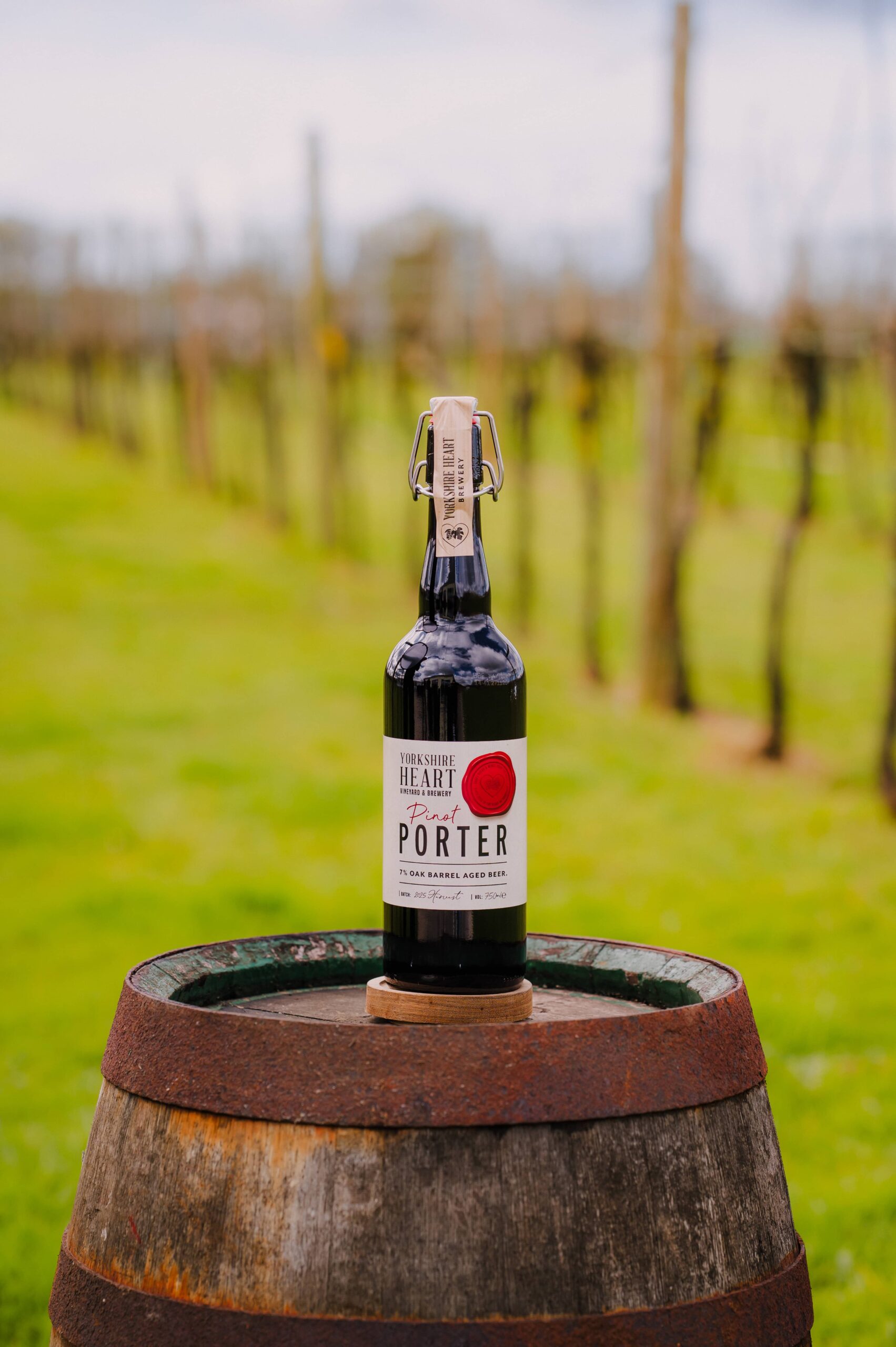
When our Pinot Noir barrels have done their job, they don’t go to waste. We age our Pinot Porter in them, so a rich, dark porter picks up a little of the character of the wine that came before it. It’s a genuine one-off from the estate, and a nice way to see the vineyard and the brewery working together.
Pinot Noir compared to other reds
If you’re more used to Merlot or Cabernet Sauvignon, here’s how Pinot Noir stacks up.
| Pinot Noir | Merlot | Cabernet Sauvignon | |
|---|---|---|---|
| Body | Light | Medium | Full |
| Tannin | Low and soft | Medium | High |
| Typical flavours | Red cherry, strawberry, raspberry | Plum, blackberry | Blackcurrant, cedar |
| Serve | Lightly chilled | Room temperature | Room temperature |
In short, if you find big reds a bit much, Pinot Noir is the one to try. If you want something to stand up to a rare steak on a winter night, Cabernet Sauvignon is still your answer. Browse our English red wines to find your fit.
As we write this, the 2026 Pinot Noir is safely in the winery, and the slow part begins. It’ll be a while before it’s ready for the bottle, and we’ll keep you posted along the way.
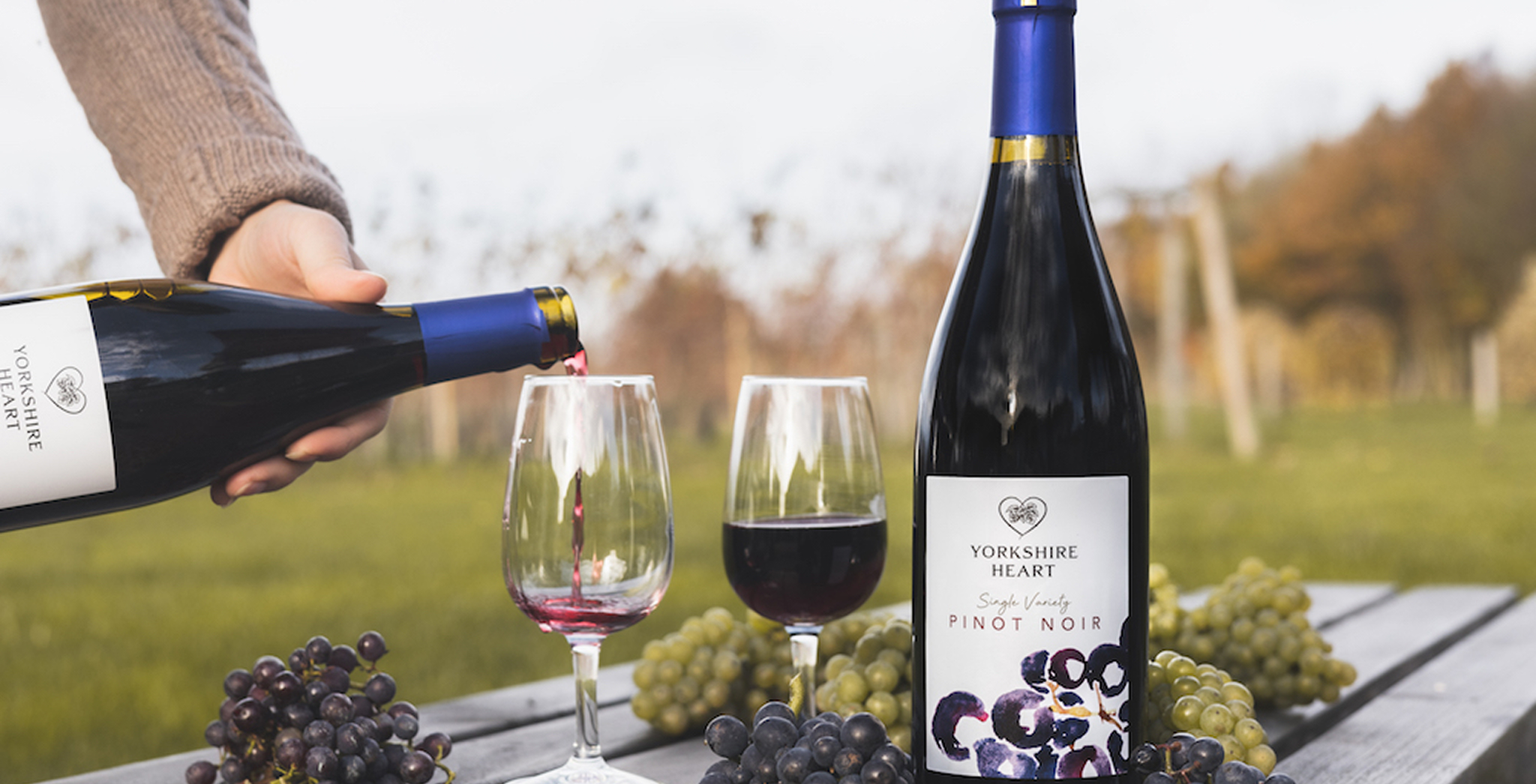
In the meantime, the best way to understand what all this effort is for is to taste it. Pour yourself a glass of our Pinot Noir, give it a light chill, and see what Yorkshire can do with the world’s fussiest grape. Or add a bottle to a Pick Six and try it alongside the rest of the range.
And if you’d like to see the vines for yourself, come and visit. Book a vineyard tour and tasting and we’ll walk you round the vineyard, show you where the Pinot Noir grows and pour you a glass at the end of it.
Pinot Noir FAQs
Pinot Noir is a red wine grape. It has black skins and is best known for making light-bodied, silky red wine. Because its juice is clear, it can also be pressed quickly and gently to make white wine and sparkling wine, including Champagne, without taking on colour from the skins.
Pinot Noir is almost always a dry wine. Its bright red-fruit flavours of strawberry, raspberry and cherry can taste ripe and fruity, which some people mistake for sweetness, but nearly all of the grape sugar is fermented into alcohol. Our English Pinot Noir is dry, light and fresh, with soft tannins.
Yes, lightly. Pinot Noir is best served slightly cool, at around 14 to 16°C, which is cooler than a typical room. Around 20 to 30 minutes in the fridge before opening is about right. A light chill keeps the wine fresh and lifts its red fruit, while serving it too warm can make it taste flat.
Yes. Pinot Noir is one of the most widely planted grapes in England, used for both sparkling and still red wine. It’s a difficult grape anywhere, and even more so in a cool, damp climate, but careful vineyard work and hand picking make it possible. We grow it at Yorkshire Heart in Nun Monkton, North Yorkshire.
The UK grape harvest usually runs from late September through October. The exact timing depends on the season, as growers wait for the right balance of sugar, acidity and ripe flavour before picking. Early-ripening varieties and grapes for sparkling wine are often picked first, with still red wine grapes like Pinot Noir following.
Pinot Noir pairs brilliantly with roast duck, mushroom dishes and charcuterie. Its light body, soft tannins and fresh acidity also make it a great match for roast chicken, pork and game birds such as pheasant and partridge. As a lighter red, it suits food that a heavier wine like Cabernet Sauvignon would overpower.

Sign up for news and special offers
Subscribe to our newsletter to be the first to hear about exciting news, updates, events and receive exclusive offers.