

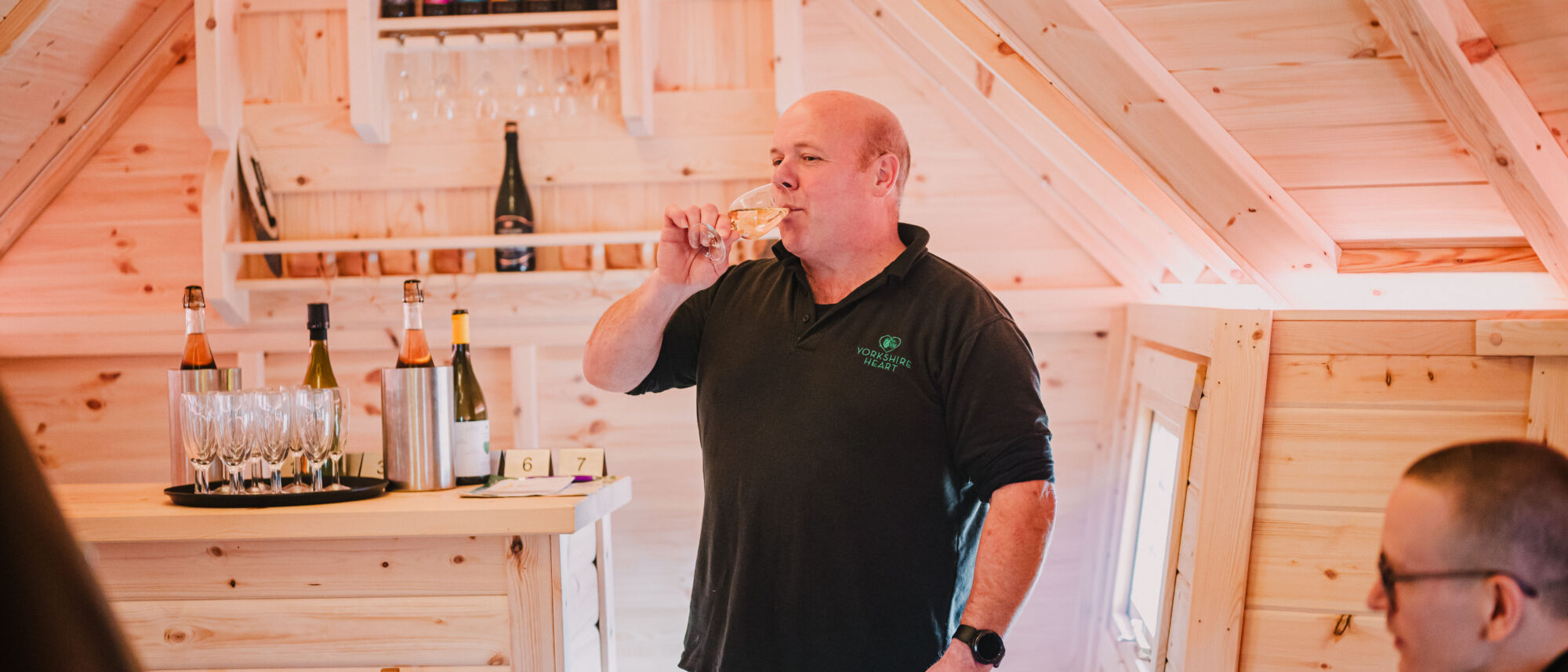
There’s something quietly brilliant about a wine tasting at home. A few friends round the table, half a dozen bottles lined up, the lights properly on so you can actually see what you’re drinking. By the second wine, somebody’s arguing that they can smell strawberries. By the fourth, somebody’s rewritten their entire opinion on rosé.
We’ve hosted plenty of tastings up at the vineyard near Nun Monkton, and we get asked the same thing all the time: how do you do this at home? The honest answer is, it’s easier than you think. This is our straightforward guide to hosting a wine tasting party at home, with a few Yorkshire Heart suggestions woven in for good measure.
We’ll cover the kit, themes, choosing wines, getting the temperatures right, the actual tasting, and how to keep it all feeling fun rather than fancy.
Why host a wine tasting at home?
A tasting at home is more relaxed than booking a table somewhere, and a lot cheaper. You’re not on a clock, the company’s already good, and nobody’s bringing you the wrong glass for the wrong wine.
It’s also a brilliant way to break out of a rut. Most of us drink the same three wines on rotation without really thinking about it. A tasting forces you to compare wines side by side, and you almost always find something new. We’ve watched lifelong red drinkers convert to English sparkling in the space of one evening.
It works for any occasion too. Birthday, hen do, dinner party warm-up, Christmas Eve, a wet Tuesday when you just want an excuse to get the good glasses out.
What you’ll need (the kit list)
Nothing fancy. Most of this is probably already in your kitchen.
- Four to six bottles of wine (more on which ones in a minute)
- Wine glasses, at least one per guest, ideally two each for side-by-side comparisons
- A jug of water and plain crackers or bread to clean the palate between wines
- Notepads or printed scorecards, and pens
- A corkscrew you’ve actually used before (now is not the moment to test a new gadget)
- A small jug or spittoon per guest, optional but handy if you’re working through six bottles
- An ice bucket for whites and sparkling
- A decanter or jug for any reds that need a bit of air
- Light snacks (more on those in a minute)
ISO tasting glasses are the technical ideal, designed to concentrate the aromas at the top, but honestly any decent wine glass works. We’re not snobs about this.
Pick a theme (this is the fun bit)
A theme turns a wine tasting from “people drinking wine” into a proper event. Here are five we like.
1. The English wine tour
Our flagship recommendation, and the one nobody else is really doing well. Pick four or five English wines from different vineyards across the country, ideally working north to south, or stick to a Yorkshire-only line-up.
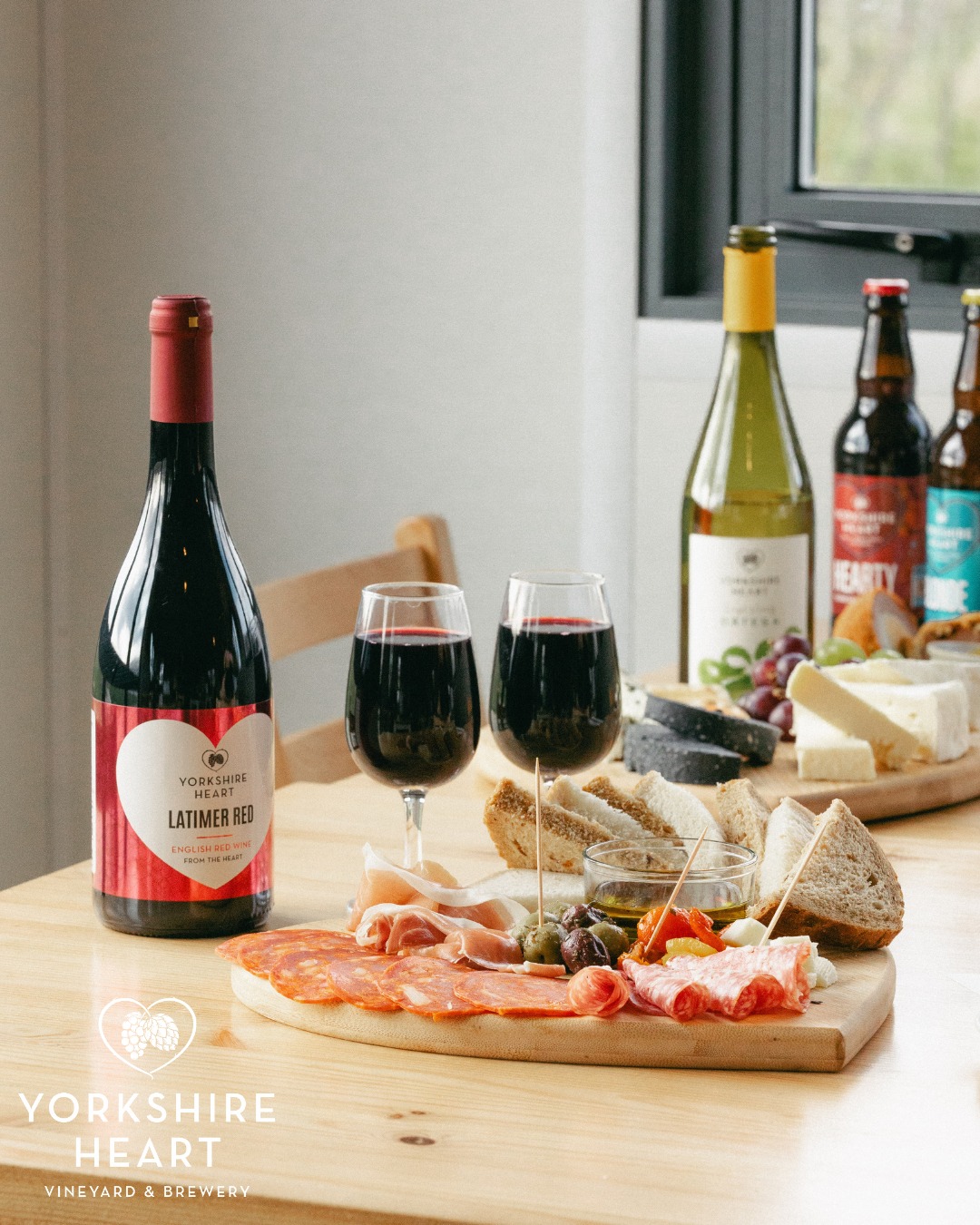
For a Yorkshire-only tasting, try our Latimer White as the opener, our Ortega for something a touch more aromatic, our Pinot Noir for the red, and finish on the Kathleen Vintage Sparkling Rosé. Add a Kent or Sussex bottle if you want a proper geographical contrast, and let people guess which is which.
2. Old World vs New World
The classic. One French Chablis against an Australian Chardonnay. One Spanish Rioja against an Argentinian Malbec. Throw in a Yorkshire Heart bottle as the wildcard at the end and watch it hold its own.
3. One grape, multiple regions
Pick a grape and try it from three different parts of the world. Pinot Noir is perfect for this: Burgundy, New Zealand, and Yorkshire Heart side by side. You’ll be amazed how different the same grape can taste depending on where it’s grown.
4. Vertical tasting
Same wine, different vintages. If you’ve been quietly collecting our Eleanor or Kathleen for a few years, dig out two or three years and taste them in order. It’s the closest you’ll get to time travel in a glass.
5. The sparkling showdown
English sparkling vs Champagne vs Prosecco. Worth knowing: English sparkling has been outperforming Champagne in blind tastings since 2015. It’s well documented, not a Yorkshire boast. Pour them blind and let people pick their favourite before the bottles are revealed.
How to choose your wines
A few practical rules:
- Stick to four to six wines. Beyond six, palates get tired and the comparisons get muddled.
- One 75cl bottle gives roughly eight to ten tasting pours of 75ml each, so one bottle is plenty for a small group.
- Mix it up. At least one white, one red, and ideally one sparkling or rosé.
- Set a per-bottle budget so the tasting feels fair. You can always mix in one “splash out” bottle for contrast.
- If you’re leaning into English wines, the cool-climate whites are where England genuinely shines. Solaris, Bacchus, Seyval Blanc, and Ortega all thrive in our climate.
English reds are getting better every year, but they’re still finding their feet compared to our whites and sparkling. We’re proud of our Pinot Noir, and a chilled lighter red can be a revelation, but if you want to pick a category where England punches above its weight, start with the whites and the fizz.
If you’d like a ready-made line-up, our Latimer Wine Taster Pack gives you a white, a red and a rosé in one go, which is enough for a small tasting on its own.

Setting the scene
A tasting setup is different from a dinner setup. A few things to think about:
- Bright enough lighting that you can see the colour of the wine clearly. Save the candlelit dinner for another night.
- No strong-smelling food cooking in the kitchen, no scented candles, no perfume. Smell is half of taste.
- A clean white tablecloth, or even just a sheet of A4 under each glass, helps you judge the colour properly.
- Music low enough that people can actually hear each other.
- Number each bottle if you’re keeping it blind, or set out tasting cards naming each wine if you’re not.
Getting the wines ready (temperature and breathing)
This is the bit most people get wrong, and the bit that makes the biggest difference.
Ideal serving temperatures:
- Sparkling and dessert wines: 5 to 7°C (fridge or ice bucket)
- White and rosé: 8 to 12°C (fridge for two hours, then 20 minutes out before pouring)
- Light reds, like our L.F.R. or Latimer Red: 12 to 14°C (slightly chilled is actually correct)
- Fuller reds: 16 to 18°C (cool room temperature, never warm)
Breathing and decanting:
- Most reds open up nicely with 30 to 60 minutes of air before serving
- Decanting helps fuller reds reveal more of their character
- Whites and sparkling don’t usually need decanting
How to actually taste wine (the 5 S’s)
Don’t make this feel like an exam. The 5 S’s are a useful structure, not a test you can fail.
- See. Tilt the glass against something white. Look at the colour and the clarity. Is it pale or deep? Watery or rich?
- Swirl. A gentle swirl for five to ten seconds. This wakes up the aromas.
- Smell. Get your nose in the glass and breathe in. Don’t overthink it. What does it remind you of? Fruit, flowers, toast, biscuits, freshly cut grass?
- Sip. A small sip, let it sit on your tongue for a few seconds, then swallow (or spit, if you’re working through six bottles).
- Savour, or score. Note the finish, which is just the word for how long the flavour lingers after you’ve swallowed. Then write down what you thought.
Nobody needs to find “notes of crushed gravel” or “a hint of wet stones”. If it tastes like pear, write down pear. If it reminds you of your gran’s apple crumble, write that down. The whole point is honesty.
What to serve alongside (food and palate cleansers)
Light bites, not a full meal. The food’s there to clean the palate between wines and keep people steady, not to compete with the wine.
Good choices:
- Plain crackers, bread and water as palate cleansers between every wine
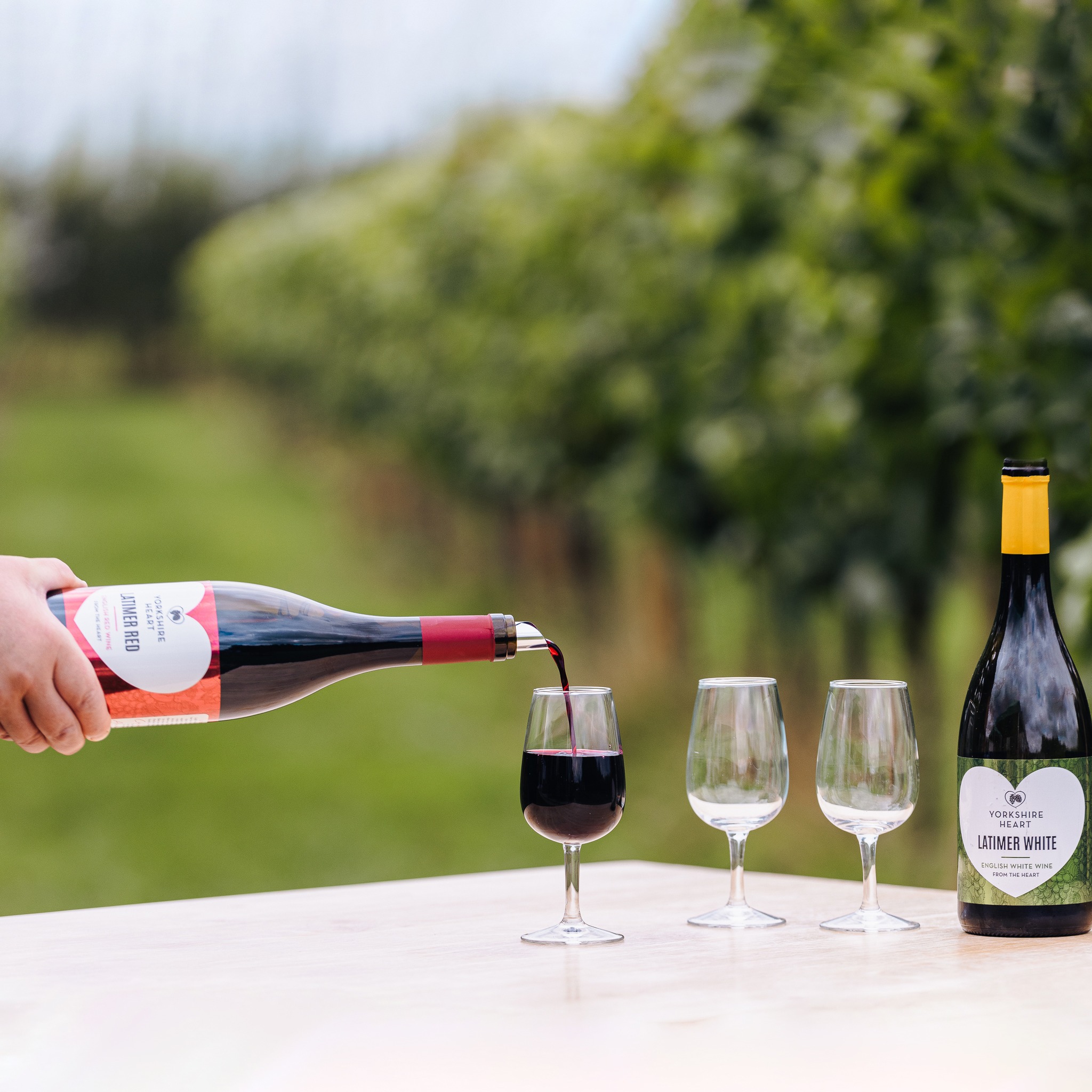
- Mild hard cheeses, charcuterie, olives, plain salted nuts, and grapes
- Save the proper dinner for after the tasting
Avoid anything too spicy, too sweet or too garlicky. They’ll all hijack the wine and ruin the comparisons.
For our own wines, here’s where each one really sings:
| Wine | Goes beautifully with |
|---|---|
| Latimer White | Soft cheese, smoked salmon, summer salads |
| Eleanor Rosé | Charcuterie, prawns, lighter cheeses |
| Pinot Noir | Mushroom dishes, duck, hard cheddar |
| Kathleen Vintage Sparkling Rosé | Anything celebratory, or just on its own |
How to lead the tasting (a simple running order)
A running order that works every time:
- Pour the first wine for everyone. Cover the labels if you want to keep it blind.
- Walk everyone through the 5 S’s together for that first wine.
- Open up the discussion. What do people taste? Who likes it? Who really doesn’t?
- Score it out of ten, or fill in a tasting card.
- Cleanse palates with water and a cracker.
- Move on to the next wine. Lightest to heaviest, driest to sweetest, finishing with a dessert wine if you’ve got one.
- At the end, vote on the wine of the evening and pour the favourite out again for a proper second glass with the food.
A few hosting tips from us
A handful of small things that make a real difference:
- Open one bottle 30 minutes before guests arrive and taste it yourself, so you know what’s coming. We call this “quality control”.
- Buy an extra bottle of your likely favourite, so you can pour it out again with the food after the tasting.
- Keep plenty of water on the table from the start. Wine tasting is properly dehydrating.
- Don’t worry about anyone getting it “right”. The whole point is finding out what you actually enjoy.
Or, if you’d rather we did the hosting…
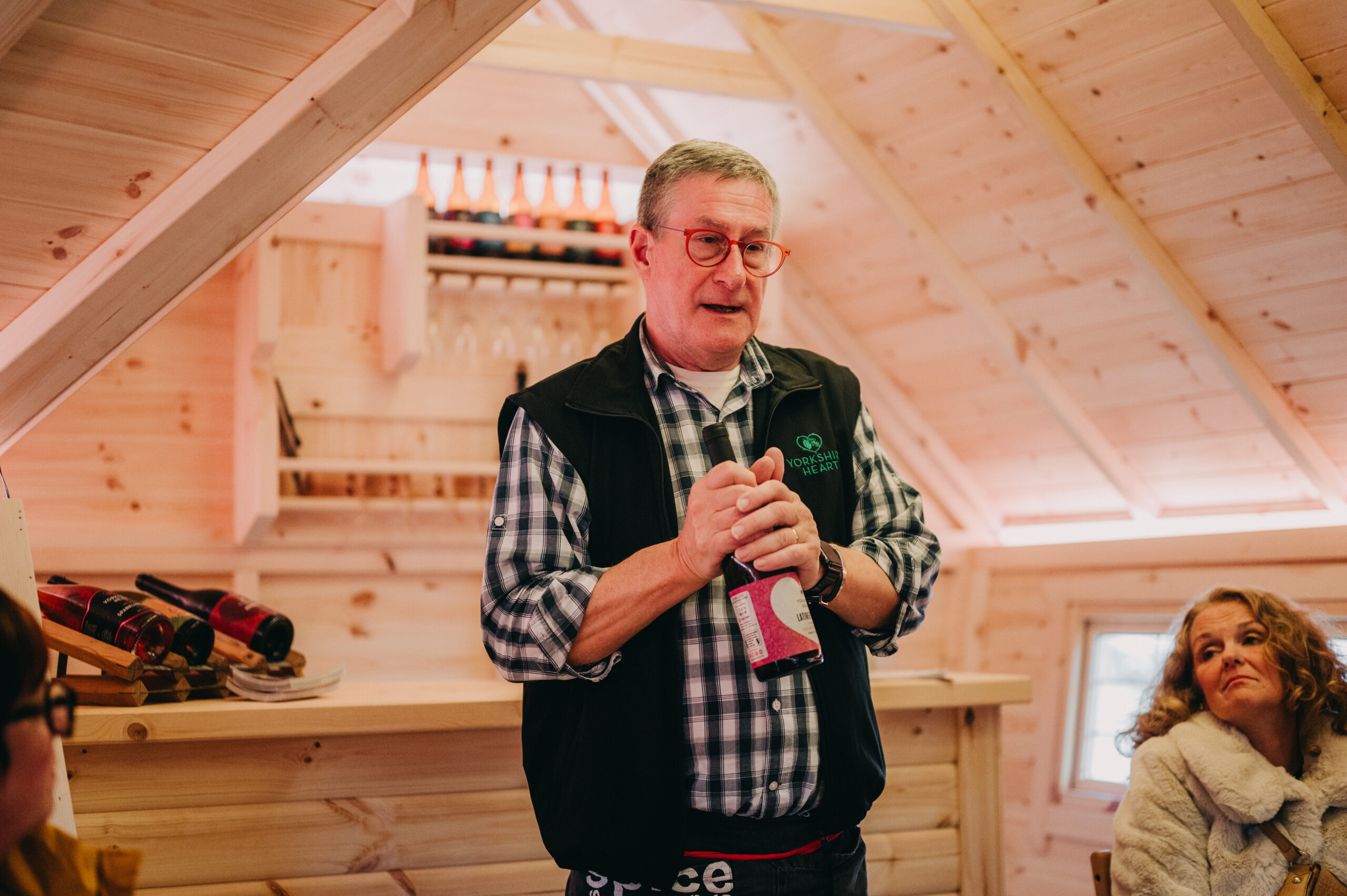
If all that sounds like a lovely idea but a bit of a project, we run tastings at the vineyard year-round. Our Cellar Door Wine Tasting is a guided sit-down session with five or six of our wines, and our Vineyard Tour and Wine Tasting bundles the same thing with a walk through the vines. We also take private bookings for birthdays, hen dos and corporate days.
It’s the easiest way to taste your way through a Yorkshire Heart line-up with somebody who knows them inside out.
FAQs
How many wines should I serve at a wine tasting at home?
Four to six is the sweet spot. Fewer than that and you don’t get a real range. More than that and your palate gets tired before you reach the end.
How much wine do I need per person?
One 75cl bottle gives you eight to ten tasting pours of 75ml. So one bottle covers a group of eight comfortably. Buy an extra if you want second pours of favourites at the end.
What’s the best order to serve wines at a tasting?
Light to heavy, dry to sweet. Sparkling first to wake the palate up, dessert wines last. Whites before reds, with a rosé in between.
Do I need proper tasting glasses?
ISO tasting glasses are designed for the job, but they’re not essential. Any decent wine glass with a stem works. Just use the same shape for every wine so the comparisons are fair.
What food goes with a wine tasting?
Plain crackers, mild hard cheeses, charcuterie, olives and grapes. Avoid spicy, sweet or garlicky things, which will overpower the wine. Save the proper meal for after the tasting.
What are good English wines to start with?
For whites, Solaris, Seyval Blanc and Ortega are brilliant starting points, and all grow happily in our Yorkshire climate. For fizz, an English sparkling rosé is a crowd-pleaser. For a serious red, try an English Pinot Noir.
Can I do a wine tasting on a budget?
Absolutely. Mix one or two “splash out” bottles with three or four mid-range bottles. The contrast between price points is actually part of the fun, and people are often surprised by which one they end up preferring.
What if my guests don’t know much about wine?
Even better. Tastings are most fun when nobody’s pretending. Honest reactions beat technical vocabulary every time.
Ready to give it a go?
A tasting at home is a small thing that turns into a brilliant evening, and once you’ve hosted one, you’ll want to do another. If you’d like a line-up to start with, you can browse all of our wines or grab the Latimer Wine Taster Pack for a ready-made starter set. And if you’d rather come and taste them where they were grown, we’re up at the vineyard most weekends with the kettle (and the corkscrew) on.

Sign up for news and special offers
Subscribe to our newsletter to be the first to hear about exciting news, updates, events and receive exclusive offers.