

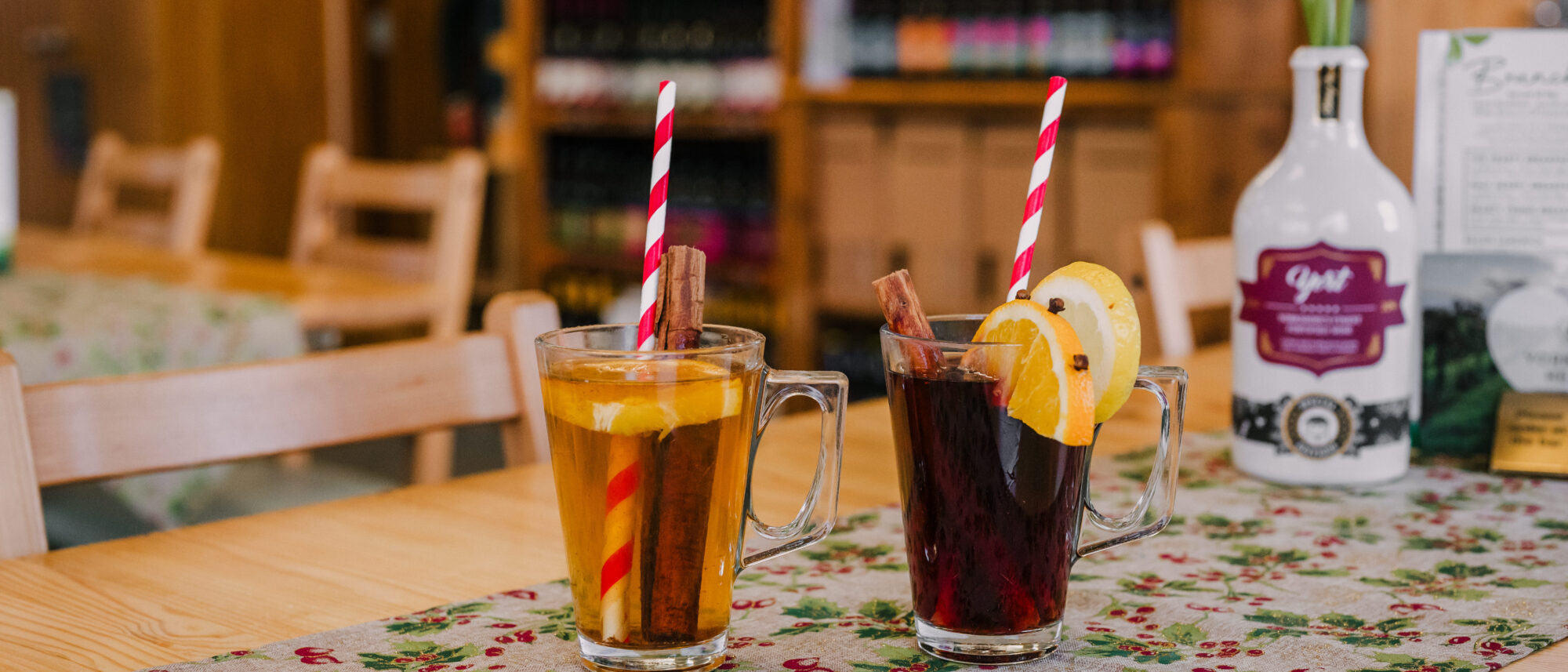
By the end of September, the vineyard at Nun Monkton has started to turn. The Rondo vines that give us Latimer Red are hanging heavy and dark, the mornings have that damp edge to them, and somebody in the winehouse always says the same thing: it’s mulled wine weather.
So here it is. Our mulled wine recipe, made with English red grown right here in Yorkshire. It takes about half an hour, and most of that is spent leaving it alone while the spices do the work.
We’ll cover which wine to use and why it matters, which spices earn their place, the one mistake that spoils the whole pan, and a few ways to make it your own, from the slow cooker version to an alcohol-free one.
What is mulled wine?
Mulled wine is red wine warmed gently with spices, citrus and a little sweetener. That’s the whole idea. You’re not cooking it, you’re infusing it, which is why the temperature matters far more than the recipe does.
People have been doing this for a very long time. The Romans spiced and heated wine, medieval England had hippocras (wine steeped with spices and strained through a cloth), and most of Europe has its own version today.
In Germany and Austria you’ll find Glühwein, the stuff that fuels every Christmas market. Scandinavia has glögg, usually stronger, often with raisins and almonds dropped in the glass. The Nordic countries tend to fortify theirs with spirit, while the British version stays closer to the wine itself.
Different names, same instinct: it’s cold outside, and warm spiced wine fixes that.
The best wine for mulled wine (and why we use Latimer Red)
Here’s the bit most recipes skip over, and it’s the bit that actually decides whether your mulled wine is lovely or a bit of a slog.
Heat and spice change wine. They push the fruit forward, and they push everything else forward too. So the qualities you want in a mulling wine are:
- Fruity. Warming a wine amplifies its fruit character. Start with a wine that has plenty of it and you’re halfway there.
- Soft, with low tannins. Tannin is what gives big reds that drying, grippy feel on your gums. Heat it and spice it and that grip turns harsh. Light on tannin is the way to go.
- Little or no oak. Oak brings vanilla, smoke and structure, and alongside cinnamon and cloves it just muddles everything.
Which brings us to Latimer Red. It’s made from 100% Rondo, grown on our own vines at Nun Monkton in the Vale of York. Rondo is one of the varieties that genuinely gets on with a Yorkshire growing season, because it ripens early and doesn’t need a long hot summer to get there.
In the glass it’s easy drinking and low on bitterness, with ripe cherry up front, a hint of dark berry, and a whisper of soft spice to finish. That last part is the happy accident. The spice note is already sitting there in the wine, so when you add cinnamon and cloves, you’re building on something rather than covering it up.

Why Rondo is perfect for mulling
Rondo has always given us soft, ripe fruit and not much grip, and that's exactly what you want in a pan. The wines that fall apart when you warm them are the big, oaky ones, because heat pushes the tannin and the oak forward and it all turns a bit harsh. Latimer Red hasn't got that to fight against. There's already a little spice sitting in it, so when you add the cinnamon and the cloves you're building on something rather than burying it.
Gillian Spakouskas
Now, the honest bit. We’re not going to tell you that mulled wine needs an expensive bottle, because it doesn’t. Once you’ve added citrus, sugar and a fistful of whole spices, the subtleties of a fine wine are gone, and you’ve spent good money on something you can no longer taste. We reach for Latimer Red because it’s the right shape for the job, not because it’s the dearest thing on our shelf. If you’d rather drink your good bottle alongside the mulled wine instead of inside it, we’d say that’s a sound decision.
What we would say is this: a wine grown, picked and made a few miles from where you’re drinking it tastes a little bit better. Most mulled wine is made with whatever anonymous red was cheapest that week. Ours starts in a field we can see out of the window.

Which wines work for mulling
| Wine style | How it mulls | Verdict |
|---|---|---|
| Fruity, unoaked red (like Latimer Red) | Fruit comes forward, spices sit neatly on top, no harshness | The sweet spot |
| Big, oaked red | Tannin turns drying and bitter when heated, oak fights the spices | Save it for the cheeseboard |
| Very light red | Pleasant, but the spices can bully it into tasting thin | Works, but go easy on the cloves |
| White or rosé | Makes a lighter, fresher drink that surprises people | Not traditional, but good (see below) |
If you fancy exploring what English reds can do before you commit a bottle to the pan, you’ll find the full range of our English red wines in the shop, and our guide to the best red wine for winter covers the ones we’d rather you drank as they are.
Mulled wine ingredients and spices
This makes roughly six small glasses, which is one bottle’s worth. Scale it up as needed. We’ve written it as a starting point rather than gospel, because mulled wine is a taste-as-you-go sort of drink.
You’ll need:
- 1 bottle Latimer Red (750ml)
- 1 orange, sliced, or studded with the cloves
- 1 to 2 cinnamon sticks
- 4 to 6 whole cloves
- 1 to 2 star anise
- A little freshly grated nutmeg
- 50 to 75g soft brown sugar, or honey, to taste
- Optional: a splash of brandy or port
What each spice actually does
Cinnamon is the backbone. It brings the warmth and the sweetness you associate with the smell of mulled wine before you’ve even tasted it. One stick is plenty for a bottle, two if you like it forward.
Cloves are the powerful one. They’re sharp, almost medicinal on their own, and they cut through the sweetness so the whole thing doesn’t turn into pudding. Go carefully, because too many will take over the pan.
Star anise brings a gentle liquorice note and a bit of depth. It’s also the prettiest thing in the pan, which is worth something when you’re serving.
Orange does two jobs. The juice adds freshness and the peel adds the aromatic oils, which is where most of the flavour lives. Slice it, don’t juice it.
Nutmeg goes in at the end, grated straight over. A little goes a long way.
Sugar or honey balances the acidity in the wine. Start with less than you think, taste, and add more once everything else has had time to infuse.
One rule worth keeping: use whole spices, never ground. Ground spices don’t dissolve, so they leave you with a cloudy pan, a gritty last mouthful and a layer of silt at the bottom of the glass. Whole spices infuse cleanly and lift out at the end.
How to make mulled wine (step by step)
Prep time: 5 minutes
Cook time: 25 minutes
Serves: around 6 small glasses per bottle
- Make a spiced syrup. Pour about a glass of the wine into a large pan, add the sugar or honey, the orange slices and all the whole spices. Heat gently, stirring, until the sugar has fully dissolved.
- Let it bubble, briefly. Bring that small amount of liquid to a gentle simmer for 4 to 5 minutes, until it thickens slightly into a syrup. This is the only point in the whole recipe where the pan should bubble.
- Add the rest of the bottle. Pour in the remaining wine and turn the heat down low.
- Warm it through, slowly. Give it 15 to 20 minutes on the lowest heat you’ve got. It should steam, never bubble.
- Taste and adjust. More sugar if it’s sharp, another cinnamon stick if you want more warmth, a squeeze of orange if it’s heavy. Add the brandy or port now, if you’re using it.
- Grate over the nutmeg, ladle into warmed glasses, and serve.
The one mistake to avoid
Don’t let it boil.
Alcohol evaporates well below the temperature water boils at, so a bubbling pan drives it off and leaves you with hot spiced grape juice. Worse, boiling pulls bitter compounds out of the citrus pith and the spices, and that bitterness doesn’t go anywhere once it’s there.
You’re aiming for steaming, well below a simmer, with the surface still. If you can see it moving, turn it down. If you own a thermometer, somewhere around 70°C is about right.
How to serve mulled wine
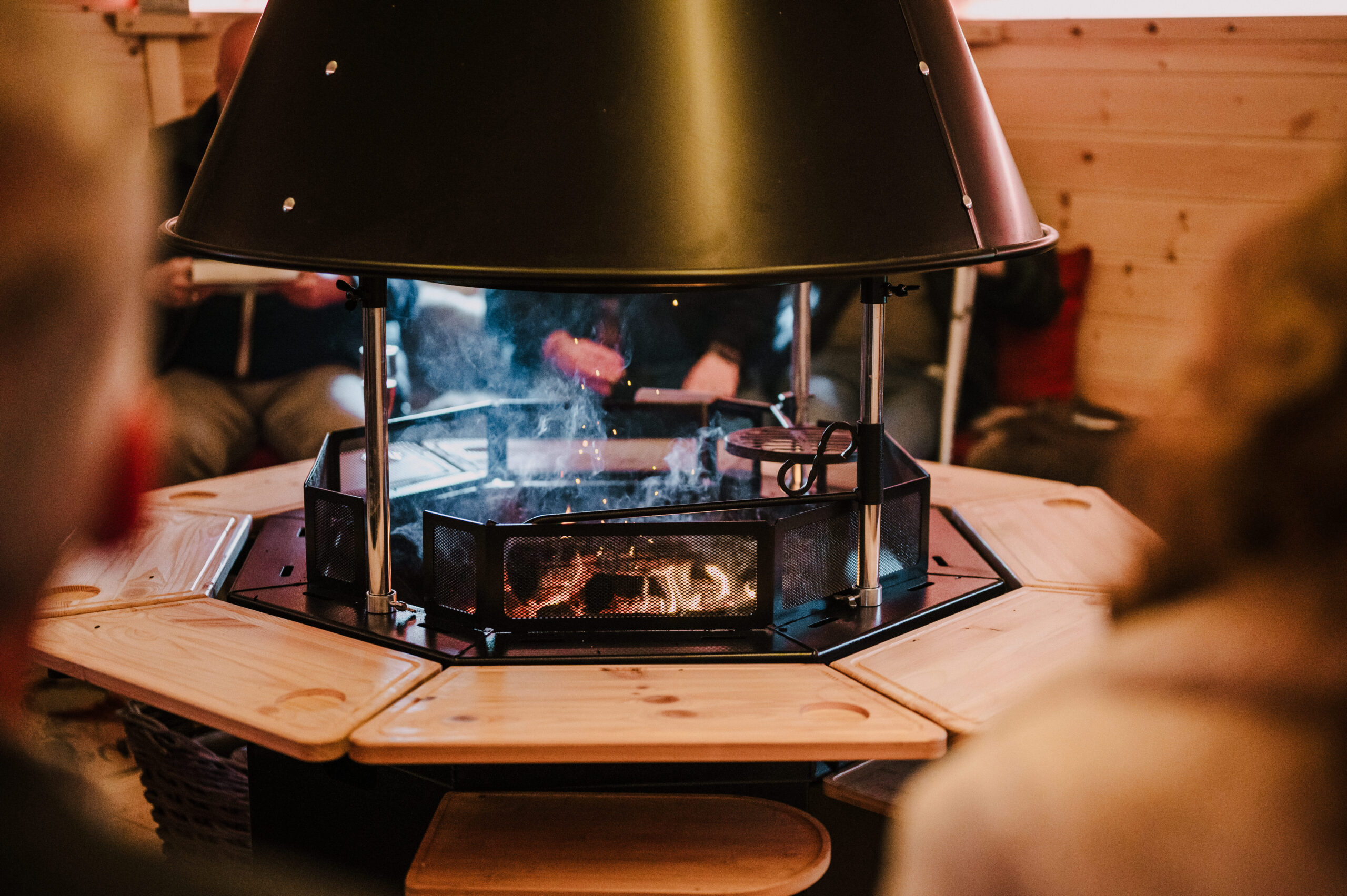
Warm your glasses first. Cold glass pulls the heat straight out of the wine, and if they’re thin they can crack. Run them under hot water and dry them, or use heatproof mugs, which is what most of us reach for anyway.
Garnish simply. A fresh orange slice and a cinnamon stick in the glass, and the star anise from the pan if you’re feeling fancy. Lift the spices out before you ladle, or use a small sieve, so nobody gets a clove in the teeth.
If you’re serving over a few hours, keep the pan on the lowest heat with a lid on, or move the whole lot into a slow cooker on its warm setting. Give it a stir now and then and top it up with a fresh bottle when it runs low, adding a little extra orange and one new cinnamon stick each time.
For food, mulled wine wants something rich and a bit salty against all that sweetness. Mince pies are the obvious answer and a good one. A cheeseboard is better: a firm Yorkshire cheese, something blue, and plenty of oatcakes. Our guide to wine and cheese pairings has more on that if you’re building a board. And if you’ve ever stood in a Christmas market with a bratwurst in one hand and a paper cup in the other, you’ll know exactly why that combination works.
Ways to make it your own
Slow cooker mulled wine
The easiest method there is, and the hardest to get wrong, because a slow cooker won’t boil. Add everything at once, set it to low, and leave it for an hour or so, then switch to the warm setting for the rest of the evening. It also means the smell fills the house for hours, which is arguably the real reason to do it this way.
Batch mulled wine for a party
For a crowd, make the spiced syrup in advance. Double or triple the sugar, orange and spices with a small amount of wine, simmer it into a syrup, then keep it in a jar in the fridge for up to a week. When people arrive, all you’re doing is warming wine and stirring the syrup through, which takes minutes instead of half an hour.
Two bottles will serve around a dozen small glasses, which is usually about right for a first round. If you’re hosting properly, our guide to hosting a wine tasting party at home covers glasses, pouring order and how much wine you actually need.
A lighter version with rosé or white
Mulling doesn’t have to mean red. Latimer Rosé is made from Regent and full of strawberry and raspberry fruit, and warmed gently with orange, a single cinnamon stick and a little honey, it makes a lighter, fresher drink. Go easier on the spices than you would with red, because there’s less fruit weight to stand up to them. White works too, closer to a Scandinavian glögg in spirit, with apple or pear slices instead of orange.
Alcohol-free mulled wine
Same method, no wine. Use red grape juice for something close to the original, or cranberry juice if you’d like a bit more sharpness to cut the sugar. You’ll need less sweetener, since juice is already sweet, and a strip of lemon peel alongside the orange helps stop it tasting flat. Make it in a separate pan rather than splitting the batch, and it’ll be just as good as the real thing rather than an afterthought.
Mulling it over
Once the clocks go back, this is what the winehouse smells like most afternoons. Orange peel, cinnamon, and a pan of Latimer Red ticking over on the lowest possible heat.
If you’d like to make it with wine that started life in our fields, Latimer Red is in the shop now, and it’s worth picking up an extra bottle for the party you haven’t planned yet. You’ll find the rest of our English reds there too, and if you’re still working out what to put on the table on the day itself, we’ve written about the best wines to drink at Christmas as well. Buying for somebody else this winter? Our Christmas gifts have the wine, beer and vineyard experiences in one place.
And if you’d rather someone else did the pouring, come and see where it all starts. A vineyard tour and tasting takes about an hour and a half, ends with a proper Yorkshire nibbles plate, and gets you right up to the Rondo vines this recipe depends on.
Mulled wine FAQs
Made mulled wine keeps for up to three days in the fridge in a sealed container. Strain the spices out first, or it’ll keep infusing and turn bitter. Reheat gently, only what you need, and don’t reheat the same batch more than once. An unopened bottle of wine, of course, keeps far longer.
You can, and chilled leftovers are surprisingly good, a bit like a spiced sangria. Strain it, chill it thoroughly, and serve over ice with a fresh slice of orange. It’s sweeter and more citrus-forward cold, so it’s worth a taste before you sweeten any further.
A little less than the wine you started with, but nowhere near alcohol-free. Gentle heating drives off only a small amount, and the longer and hotter you heat it, the more you lose. Adding brandy or port pushes it back up again. Treat it as a normal glass of wine, and keep an eye on how quickly warm drinks go down.
Yes, gently, and once. Strain out the spices before it goes in the fridge, then warm what you need on a low heat until it steams. Repeated reheating drives off more alcohol each time and dulls the fresh citrus, so it’s better to make smaller batches more often.
Cheap, yes. Nasty, no. Spices and sugar cover a lot, but they won’t rescue a wine that’s thin, sour or harsh, because those flaws get louder with heat. Pick an inexpensive bottle that’s fruity, soft and unoaked, and you’ll get a better result than an expensive oaked red would give you.